How to Choose a Surfboard for Your Skill Level, Body Type and Waves
The best surfboard is not the shortest board you can stand on or the board with a supposedly perfect number of litres. Start with your real ability and the waves you actually ride, then use body size, paddling fitness, dimensions, volume and the complete shape to refine the decision.
03Every design feature interacts with the complete shape
04A useful test beats a universal formula
01
Five things to consider before choosing
A suitable board helps you catch enough waves, stay in control and practise the skills you are currently trying to develop. The decision starts with the surfer and the wave, not the specification sheet.
Your real surfing level
Your level is better described by what you can do independently than by how many lessons you have taken. Can you select a suitable wave, paddle into it without help, control the board, take a direction and avoid other surfers? Or are you still learning to catch white water and manage the board safely?
A more advanced-looking board does not automatically produce faster progress. If it dramatically reduces your wave count, it may give you fewer opportunities to practise.
Your body and paddling ability
Weight matters, but it is only one part of the decision. Height, reach, shoulder mobility, strength, paddling endurance, fitness and surfing frequency affect how much foam feels useful and where that foam should be placed.
Two surfers of the same weight may therefore need different boards.
The waves you normally surf
Choose for your regular conditions rather than an imagined perfect day. Slow, weak waves generally reward glide, planing area and usable volume. Fast or hollow waves may require more control, hold and curve in the board.
Your goal and surfing frequency
A first-time surfer needs stability and repetition. A progressing surfer may need enough paddle power to reach unbroken waves. A more experienced surfer may want tighter turns, extra speed in weak surf or more control when the wave becomes powerful.
If your sessions are infrequent, keeping some extra paddle power and stability can help you spend more time riding waves and less time fighting the board.
02
Soft top vs hard surfboard
Construction changes the contact, precision and consequences of impact. It does not, by itself, determine the level required to ride a board.
Why soft-top surfboards work for beginners
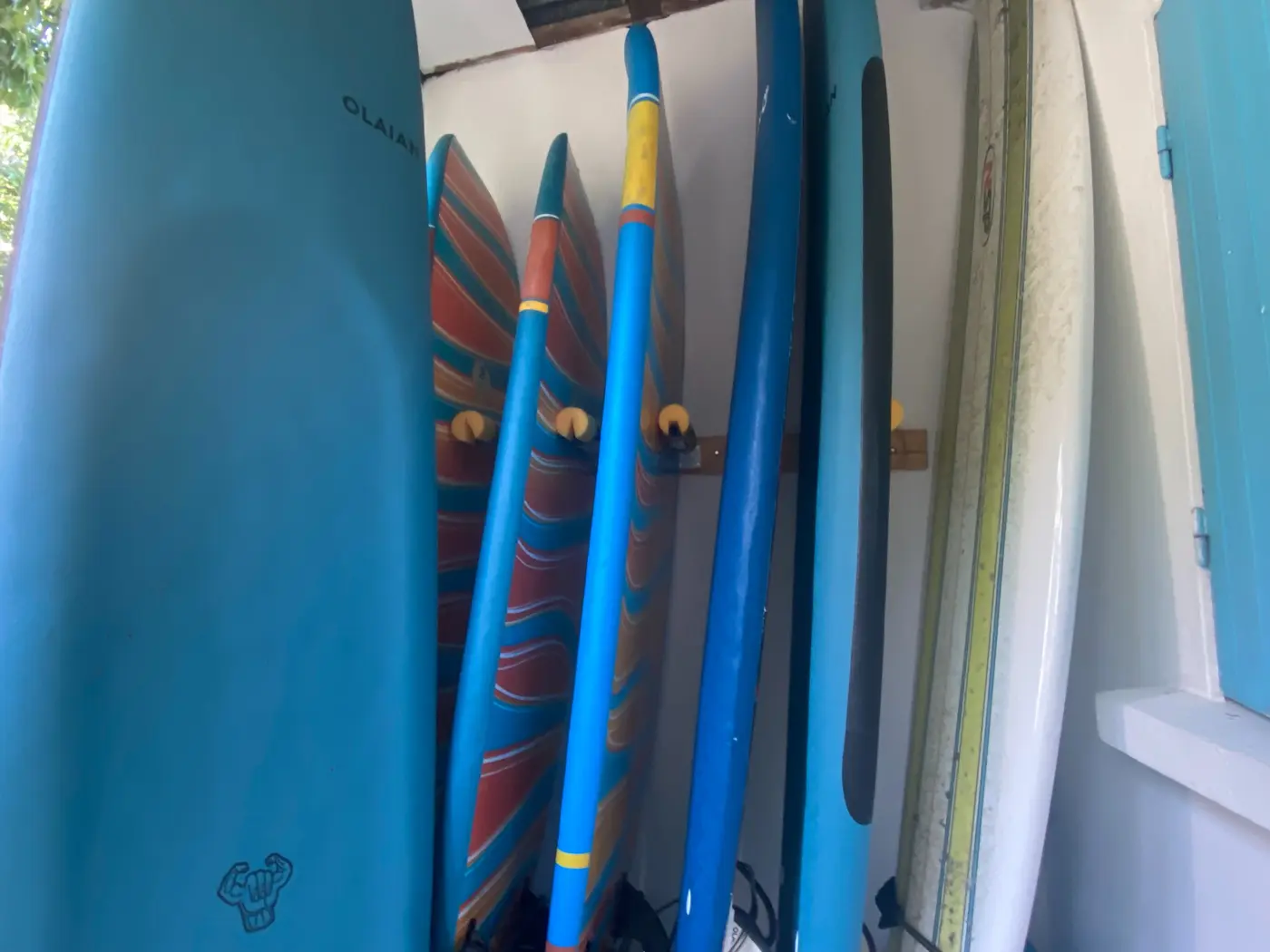
A soft top uses a softer outer deck than a conventional laminated board. Learn-to-surf models also tend to combine a forgiving outline, generous width, rounded rails and enough volume to support paddling and stability.
A suitable softboard can help a beginner feel stable at low speed, catch more waves, repeat the pop-up and learn board control. The softer construction can reduce some consequences of impact, but soft does not mean harmless.
There are performance-oriented softboards as well as very stable hardboards. Construction is only one part of the decision.
What a hardboard changes
Hardboards commonly use a polyurethane or EPS foam core with fibreglass and an appropriate resin system. Their construction allows shapers to create more precise rails, bottom contours, foil and rocker profiles.
At a comparable size and shape, the response underfoot can feel more direct. Hard surfaces and fins also demand more reliable board control. A hardboard is not automatically a shortboard: stable funboards, eggs and mid-lengths can offer a gradual transition.
When should you switch?
Consider moving on when you can control your board, catch suitable waves without assistance and identify a genuine limitation in your current equipment. Do not switch simply because you can stand up: paddling, positioning, take-off consistency and directional control are better indicators.
Choose construction after considering skill, waves and board control03
Understanding surfboard size and volume
No single measurement describes the whole board. Length, width and thickness create volume, but their position within the outline matters just as much. Rocker, rails, tail and fins complete the design.
Length
At otherwise comparable dimensions, extra length generally adds glide and surface area. It can make paddling and wave entry easier and provide more fore-and-aft stability.
Length also increases the board’s physical footprint. A board that is difficult to carry, turn around or control may be too large even if it paddles well. Going shorter becomes useful when the surfer can replace some of the lost glide with better timing and positioning.
Width
More width generally adds planing area and lateral stability, which can help at low speed and in weaker waves. A board that is excessively wide for the surfer may be harder to move from rail to rail.
Where the width sits matters too: a full nose, a wide centre and a wide tail do not create the same response.
Thickness
Thickness contributes to volume, but the maximum thickness number does not reveal where the foam is located. A board can carry useful thickness through the centre while maintaining more refined rails.
Another board may keep the same thickness towards the rails and tail, creating a much fuller and more buoyant response around the edges.
What volume tells you — and what it does not
Surfboard volume measures the board’s three-dimensional space and is expressed in litres. It is a useful indicator of overall flotation, but it does not explain the outline, surface area, rocker or distribution of the foam.
There is no universal body-weight-to-volume formula. Brand calculators can provide a starting point within a particular range of boards, but they cannot account for every design, paddling ability, surfing frequency or wave type.
Why equal-volume boards can surf differently
One board may be longer and narrower with refined rails, while another is shorter and wider with fuller rails and more foam in the tail. They may support a similar overall load while producing different paddling speed, stability, turning radius and rail engagement.
Volume is therefore a useful filter, not a final answer.
Foil and volume distribution
Foil describes how thickness flows from the nose through the centre and into the tail. Foam under the chest can support paddling and trim. Moving more foam towards the rear may place buoyancy closer to the surfer’s feet and suit a different style of turning.
Neither approach works independently of the outline, rocker, rails and surfer’s stance.
Wide point and outline
The outline is the board’s plan shape when viewed from above. The wide point is not always at the centre. A forward wide point can support glide, stability and longer lines, while moving it back can shorten the active turning area and make some shapes feel more responsive.
Nose width, tail width, rail curve and foot position can all change the result.
Rocker
Rocker is the curve seen from the side. A flatter rocker generally creates efficient glide and speed at lower power, which can be useful in small surf. The same curve may be less forgiving on a steep face or late take-off.
More rocker can help a board fit a tighter curve and provide control in faster surf. It also creates more resistance while paddling and may require extra energy in weak waves.
04
Surfboard rails and tail shapes
Rails and tail shape influence how the board enters the water, holds in the wave face and releases through a turn. Their effect always depends on the rest of the design.
What rails change
Fuller, rounder rails carry more buoyancy near the edges. They can feel forgiving at lower speeds but may require more force to engage.
Lower-volume rails generally enter the wave face more easily and can provide a more sensitive response. They also offer less flotation and may be less forgiving of poor positioning.
Most boards blend different rail characteristics from nose to tail. Rail behaviour changes with speed, rocker, bottom contour, tail width and fin placement.
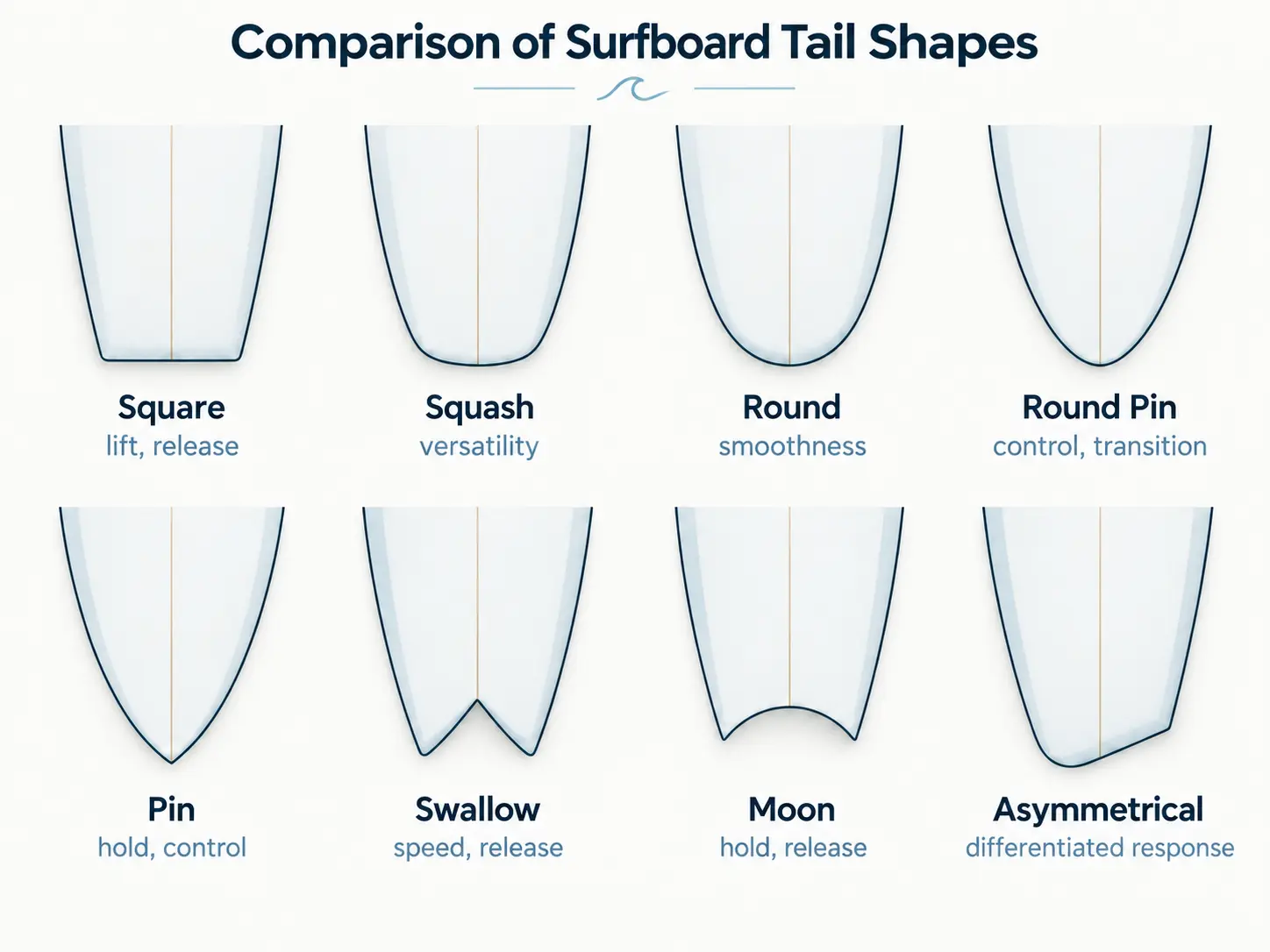
Common surfboard tail shapes
The tail continues the rail line and works with the outline, foil, rocker, bottom contours, volume and fins rather than producing one fixed behaviour by itself.
A moon tail uses a concave cut-out between two tips. Depending on its width and depth, it can extend the rail line and combine tail area with hold and release. Its behaviour still depends on the complete shape.
An asymmetrical tail deliberately uses different heel-side and toe-side geometries to account for the way a surfer applies pressure on each side of the board.
General tendencies: no tail works in isolation
Tail
General tendency
What else matters
Square
Area and corners can create lift and defined release
Tail width, rail edge and fin placement
Squash
Common balance of area, release and response
A wide and narrow squash will not feel the same
Round
Smooth outline and progressive rail-to-rail transition
Overall width, rocker and fin setup
Round pin
Curved outline with reduced tail area
Often needs more power than a wide tail
Pin
Hold and control at speed are commonly prioritised
Requires an appropriate wave and level
Swallow
Retains area while creating two points of engagement
Depth, rails and fins change the result
Moon tail
Concave cut-out that can combine tail area, hold and release
Highly dependent on width, crescent depth, rails and fins
Asymmetrical
Different heel-side and toe-side geometry can create a differentiated response
Highly specific design depending on stance, shape, rails, rocker and fins
05
Choosing surfboard fins
Fin count alone does not predict how a board will feel. Flex, material, depth, base, rake, foil and position all influence drive, hold, turning and release.
Flexible vs stiff fins
Very flexible fins are common on beginner softboards. Their softer response and less aggressive edges can make some mistakes less severe, but they do not remove the risk of impact.
Stiffer fins usually transfer pressure more directly. Stiffer does not automatically mean better, and more flexible does not automatically mean easier.
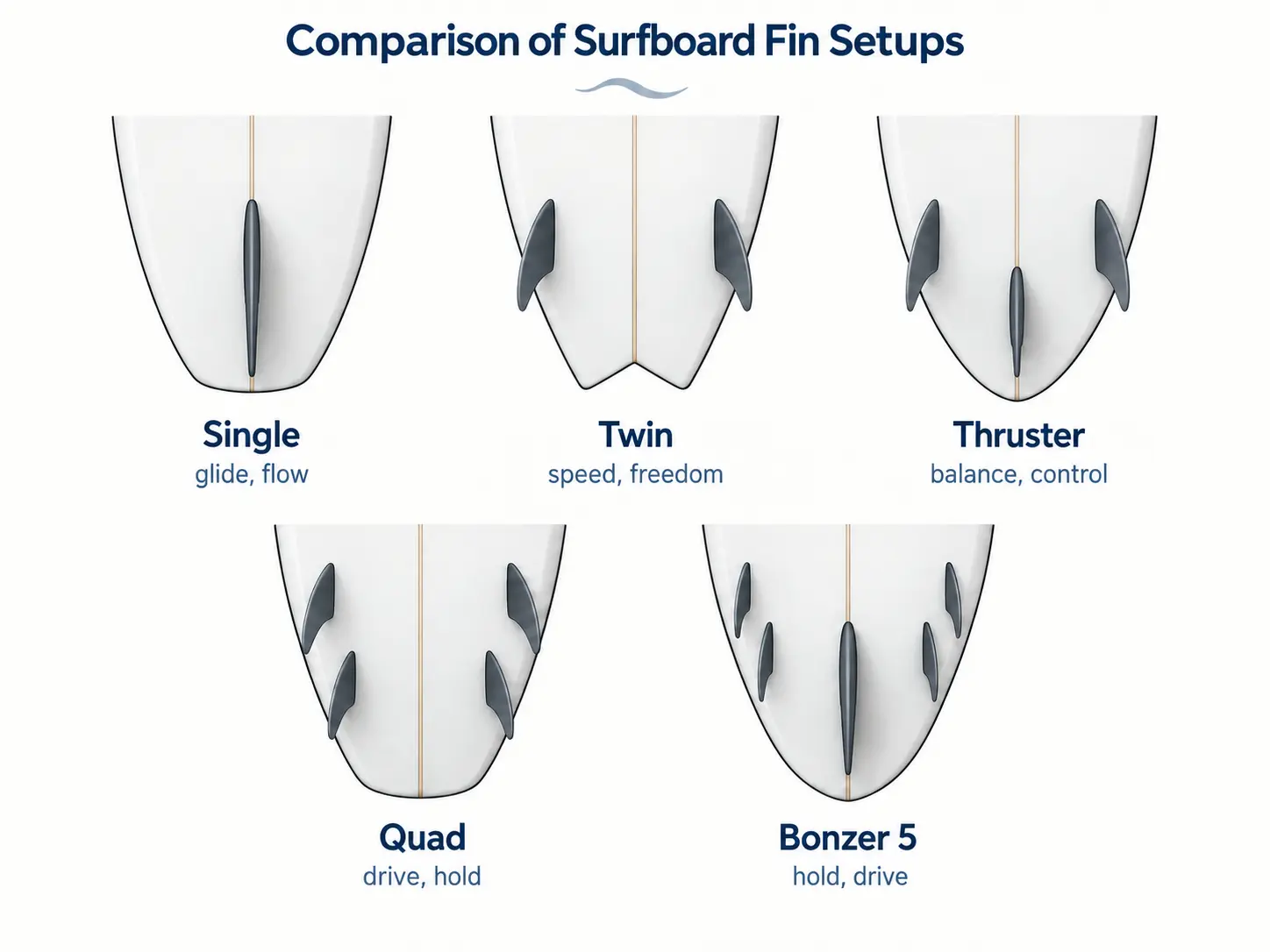
Single, twin, thruster, quad or Bonzer 5?
No fin setup works in isolation: it must match the shape, tail, rear outline, fin boxes, waves and surfer’s level. A quad designed for weak surf and a quad designed for a fast barrel do not serve the same purpose.
Bonzer designs have historically used both three-fin and five-fin configurations. Here, the Bonzer 5 uses one centre fin and four side runners. The fin cluster works with the board’s concaves and overall shape and can provide additional hold and rail control depending on the board and conditions.
General tendencies of the main fin setups
Setup
Common characteristics
Important context
Single fin
Smooth trim, directional stability and longer turns
Not automatically a beginner setup
Twin fin
Speed, drive and a freer feeling
Can feel loose if the board or surfer is not suited to it
Thruster
Familiar balance of control, pivot and manoeuvrability
Fin size and placement can substantially change the board
Quad
Speed, rail engagement and hold without a centre fin
Can suit small surf or powerful waves depending on the shape
Bonzer 5
Additional hold and rail control can be sought
1 centre fin and 4 side runners; depends on the concaves, shape and conditions
06
Choosing a board for your skill level and body type
Progress usually means reducing the assistance provided by the equipment only when your real skills allow you to retain enough waves and control.
First sessions
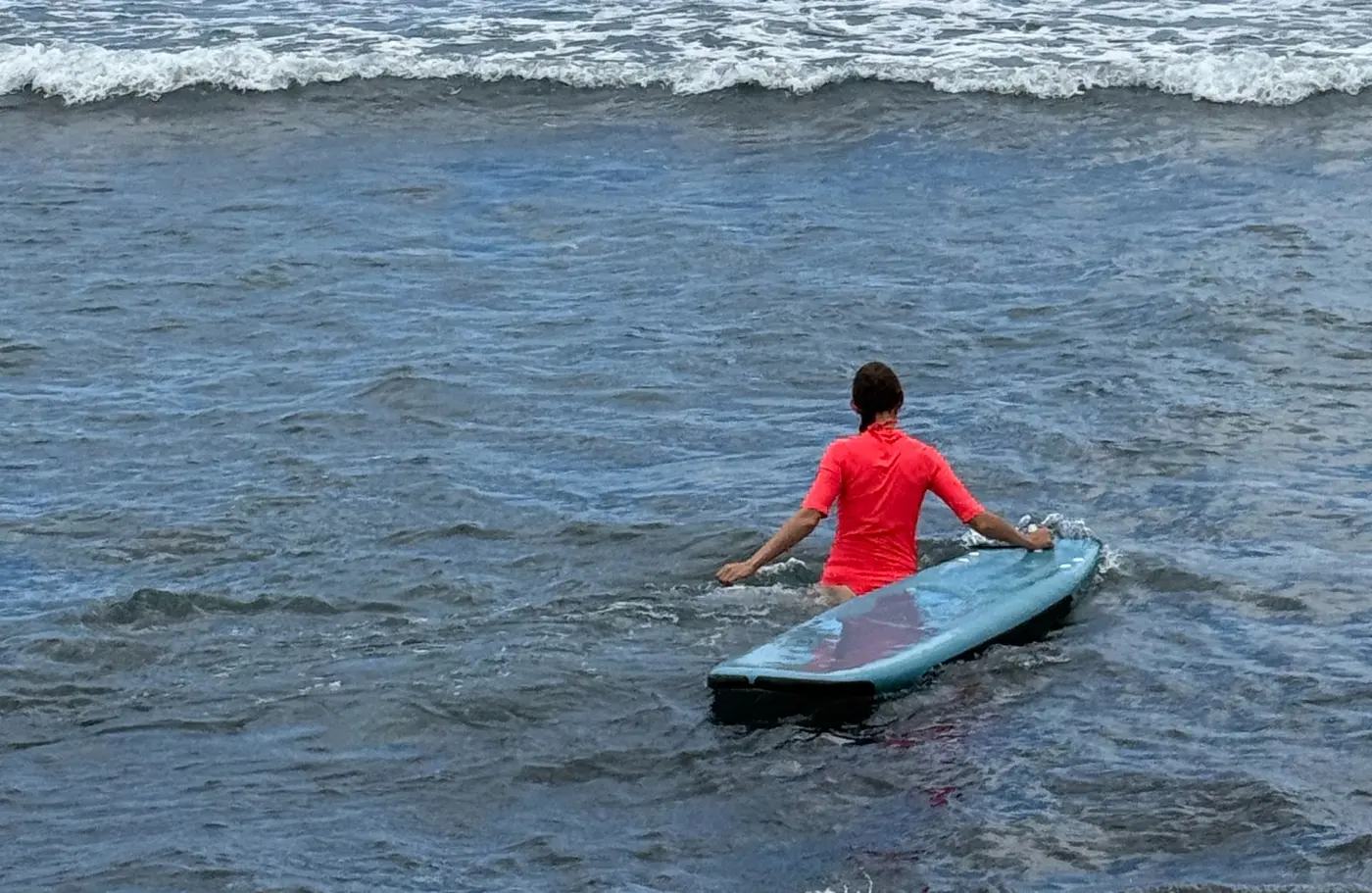
The priorities are stability, control and repetition. A suitably sized soft top with useful width, manageable length and foam under the paddling position is generally a strong starting point.
Bigger is not always better: the surfer must still be able to carry, turn and control the board.
First unbroken waves
Once you start paddling into green waves, keep enough glide to work on positioning and take-off timing. Dropping too much length or volume can reduce your wave count.
A progressive funboard, egg or mid-length may provide a better step than moving directly to a performance shortboard.
Developing manoeuvrability
When paddling, take-offs, priority rules and basic direction are consistent, the choice can become more specific. Instead of asking only for fewer litres, identify the response you need: a tighter turning radius, speed in weak surf, smoother trim or extra control in steeper waves.
A practical starting point by surfing stage
Surfing stage
Main priority
Useful characteristics
White water
Stability and board control
Manageable length, width, forgiving construction and usable volume
First green waves
Paddle power and early entry
Glide and foam positioned to support paddling
First directions
Control without losing too many waves
Progressive rails and comfortable dimensions
Independent progression
A defined technical goal
Shape matched to waves, style and current limitations
Why weight alone is not enough
Weight influences flotation, but it cannot determine a precise volume by itself. Height, weight distribution, mobility, paddling technique, strength, endurance, surfing frequency, wave power and the board family all matter.
Extra volume may support an occasional surfer or someone rebuilding paddling fitness. If that foam is concentrated in very full rails or excessive width, however, it may also make the board harder to engage.
Paddling fitness and consistency
The board and surfer must build enough speed before the take-off. A surfer with limited paddling endurance may benefit more from keeping glide and support than from seeking immediate manoeuvrability.
As paddling and positioning improve, more demanding shapes can be tested without sacrificing most of the session.
07
Choosing a surfboard for different waves
Choose for the waves you actually ride. Every tendency below assumes that the surfer’s level and the area of practice are appropriate for the conditions.
Small or weak waves
Small-wave boards generally use some combination of planing area, usable volume and moderate rocker to enter the wave and maintain speed. Extra nose or tail width can help, but it must work with the rails, fins and surfer.
A small-wave board is not necessarily long. Fish and compact shapes can create area and volume through width rather than length.
Fast waves
A fast wave requires early direction, accurate positioning and reliable control. More rocker, a controlled outline or rails designed for speed can help, depending on the complete shape.
A board that is too difficult to paddle may delay the take-off and remove that advantage for the wrong surfer.
Hollow or powerful waves
In hollow or powerful surf, hold, control and the ability to fit the curve become more important. Narrower tails, suitable rails, additional rocker or a fin setup with more hold may be used.
These features do not make a demanding wave suitable for a surfer who lacks the necessary experience.
One board or several?
A versatile board can cover a useful range of conditions, but no design is perfect everywhere. Before building a quiver, identify the actual problem: limited paddling, late entry, lack of speed, difficulty turning or loss of control when the wave becomes faster.
08
Applying the guide in Reunion Island
In Reunion Island, choosing equipment is never permission to enter the water. Conditions, regulations, the authorised area, active safety arrangements and the surfer’s genuine ability remain the priority.
Étang-Salé
Étang-Salé can offer very different faces depending on the area and the day, from supervised learning conditions to much faster and more powerful waves. A stable board may suit a beginner exercise in an appropriate area, but that does not make the same equipment or location suitable when swell, current, crowds or the breaking zone change. Read the English beginner guide to Étang-Salé.
Saint-Leu
At Saint-Leu, the reef environment, access, paddling distance and speed of the waves can substantially change the equipment decision. Paddle efficiency may conserve energy, while a more precise board may suit an experienced surfer in appropriate conditions. Read the English guide to private lessons in Saint-Leu.
Follow current regulations and use the authorised area
Confirm which safety arrangements are operating
Consider your physical condition and genuine ability
Follow instructions from the professionals present
The same coastline changes with swell, wind, current and the selected area09
Try before you buy
Specifications cannot tell you exactly how a board will feel under your chest and feet. During a test, assess more than how easily the board turns.
Whenever possible, compare the board with equipment you already know and change only a limited number of variables at a time. A lesson or rental can help you test a realistic compromise before buying. Explore the English lesson guide or contact Marin with your level and usual conditions.
The right board is not the one that looks most advanced on the beach. It is the one that helps you catch waves, stay in control and keep learning.
Paddling effort
The number of waves you actually catch
Stability during take-off
How easily you can set a direction
Control as the wave becomes faster
Fatigue over the full session
How easily you can carry and handle the board
Surfboard questions answered
Surfboard questions answered
What size surfboard should a beginner choose?+
Choose enough length and width to support paddling, stability and wave entry, while keeping the board manageable on land and in the water. The correct size also depends on body type, mobility, wave conditions and the complete design.
How many litres should my surfboard be?+
There is no universal number. Volume depends on skill, paddling ability, surfing frequency, board family and waves. A litre range can be a starting point, but it cannot describe the board’s volume distribution, rails, outline or rocker.
Can I choose surfboard volume from my weight alone?+
No. Surfers of the same weight may have different height, fitness, paddling technique and experience. Weight affects flotation requirements, but it should never be used as the only input.
Why do two equal-volume boards feel different?+
The same volume can be distributed through a long, narrow board or a short, wide one. Foil, rocker, outline, rails, tail and fins change paddling, stability, turning and control.
Is a soft top better than a hardboard for beginners?+
A suitable soft top generally provides a forgiving platform for first sessions. A stable hardboard may become appropriate once the surfer can control the equipment and catch suitable waves independently.
When should I move from a soft top to a hardboard?+
Move when you can identify a genuine equipment limitation, not simply because you can stand up. Reliable paddling, positioning, take-offs, direction and board control are stronger indicators.
Will a shorter board help me progress?+
Not automatically. A shorter board may turn more easily once it has speed, but often requires better paddling and positioning. If it dramatically reduces your wave count, it may slow your progress.
Which tail shape works for small waves?+
Tails that retain area, including many square, squash and swallow designs, can support lift and speed at lower power. Tail width, rocker, rails and fin setup remain equally important.
What is the difference between a twin, thruster and quad?+
Twins often emphasise speed and freedom. Thrusters commonly balance control and manoeuvrability. Quads can provide speed, drive and rail engagement. The full board design determines how each setup behaves.
Do I need a different board for Étang-Salé and Saint-Leu?+
Not necessarily. Access, paddling distance, wave shape, power and the area being surfed may differ. Conditions, regulations, active safety arrangements and your genuine ability should guide the decision.
Can one surfboard work in every type of wave?+
A versatile board can cover a useful range of conditions, but no design is ideal for very weak, fast, hollow and powerful waves at the same time.
Should I try a surfboard before buying it?+
Whenever possible, yes. A test reveals paddling effort, wave count, take-off stability, control and fatigue — information that a specification sheet cannot provide.